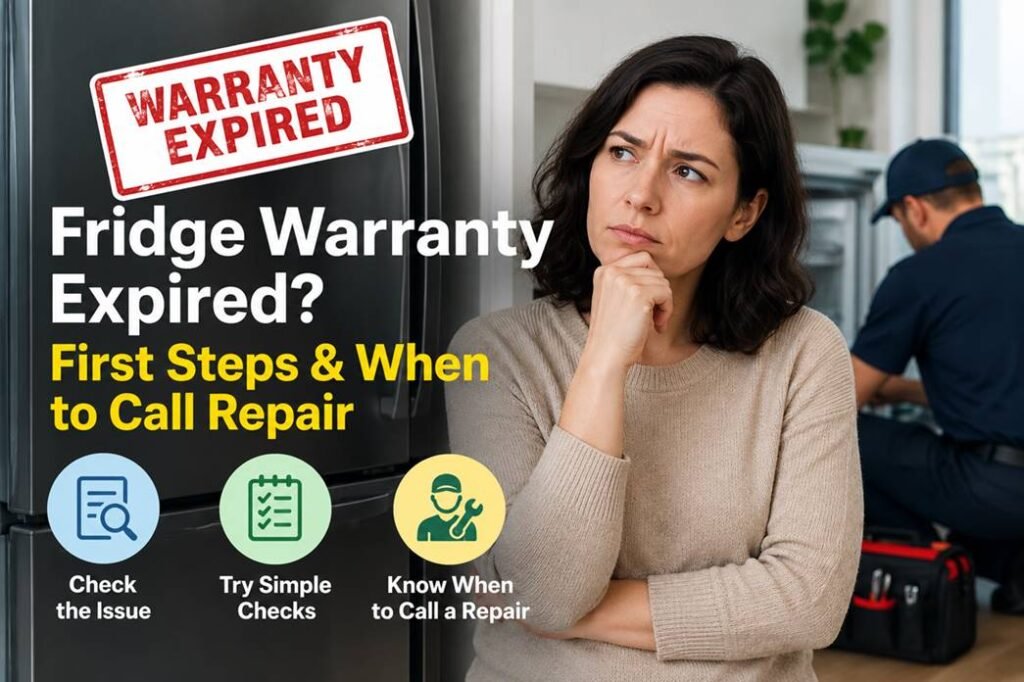
Fridge Warranty Just Expired? First Steps to Take and When to Call a Repair Technician
If your refrigerator warranty has just expired, start by saving your purchase records, checking any remaining cover and reviewing the maintenance instructions for your model.
If the fridge is working properly, warranty expiry alone is no reason to book a repair. If a fault has appeared, you may still have rights under Australian Consumer Law. Check those rights before assuming you must pay the full repair cost yourself.
Save Your Fridge’s Details and Purchase Records
Create a digital folder containing:
- A clear photo of the model and serial number label.
- Your receipt, invoice or other proof of purchase.
- Delivery confirmation and the purchase date.
- The warranty document and any extended-cover paperwork.
- Previous service reports and repair invoices.
The identification label is commonly inside the refrigerator compartment or around the door frame. Check your manual if you cannot find it.
If the fridge has developed a problem, also photograph any error code, visible frost or water leak. Record when the fault started, which compartments are affected and whether it comes and goes.
These details help the retailer, manufacturer or repair technician assess the problem without relying on memory.
Check Your Rights Before Paying for Repairs
Australian consumer guarantees can continue after a manufacturer’s warranty expires. Whether you are entitled to a remedy depends on the circumstances, including the product’s age, price, expected durability and use. There is no single guaranteed lifespan for every refrigerator.
If a fault has appeared, contact the retailer with your purchase records and a description of the problem. Ask them to assess it under the consumer guarantees, even if the written warranty has ended.
Check your warranty paperwork for separate component cover too. Some refrigerators have longer compressor cover, but the terms may exclude labour or other costs. Confirm exactly what remains covered.
Before authorising a paid repair that you hope to have reimbursed, ask the retailer or warranty provider how they want the assessment handled.
Carry Out Safe Basic Maintenance
Routine maintenance can reduce avoidable strain and help you notice developing problems. Follow your model’s instructions rather than assuming every fridge has the same layout.
Clean Accessible Condenser Areas
Dust and pet hair can restrict heat removal where they accumulate on exposed condenser components or ventilation grilles.
Check the owner’s manual first. If it describes a user-accessible cleaning procedure, switch off and unplug the refrigerator, then use the recommended brush or vacuum attachment.
Keep covers over mechanical or electrical compartments in place unless the manual specifically identifies them as user-removable. LG advises that disassembly and cleaning inside the rear mechanical compartment should be handled by a service technician.
Avoid pulling a heavy fridge out alone or straining its water connection.
Clean and Inspect the Door Seals
Use a soft cloth with mild detergent and warm water, following the manufacturer’s cleaning instructions.
Look for splits, loose sections or areas that do not contact the cabinet evenly. Also check whether bottles, containers or displaced drawers prevent the door from closing.
A closing problem may involve hinges or alignment as well as the seal. Replacing the gasket without checking the door can leave the problem unresolved.
Keep Internal Vents Clear
Move food packages away from air outlets and leave room for circulation between items. Check both compartments where applicable.
Also keep external ventilation openings clear and follow the model’s installation clearances. A gap suitable for one refrigerator may be inadequate for another.
Check Cooling Performance
Use a fridge thermometer rather than relying only on the display. Depending on the model, the panel may show a selected setting instead of the current compartment temperature.
The NSW Food Authority recommends keeping home fridges below 5°C and freezers at −18°C or below. Follow your manufacturer’s recommended settings and check readings after temperatures have had time to stabilise.
If cooling is failing, move perishable food to working refrigeration promptly. Decisions about food that has warmed depend on its time and temperature history; use the Food Authority’s guidance.
When Should You Call a Fridge Repair Technician?
The Fridge Cannot Maintain Temperature
Arrange a repair assessment if temperatures remain too high despite correct settings, clear vents and properly closed doors.
Mention whether the fridge, freezer or both compartments are affected. Fan faults, ice blockages, controls and refrigeration problems can produce similar symptoms, so diagnosis matters.
Running Time Has Changed and Cooling Is Poor
Continuous running alone does not prove a fault. Inverter compressors can run for extended periods while adjusting their speed to cooling demand.
Call when the fridge runs differently from usual and cannot maintain temperature, or when prolonged running accompanies new noise or repeated unsuccessful starts. Samsung explains that compressor and fan sounds can change with operating speed and cooling demand.
Water Leaks or Freezer-Floor Ice Keep Returning
A recurring puddle or sheet of ice on the freezer floor needs investigation. Possible causes include drainage problems, a damaged collection tray or a plumbed water connection.
Record where the water first appears. Leave drain disassembly and ice removal with sharp tools to a technician.
New Noises Accompany a Performance Change
Brief humming, tapping or refrigerant sounds can be normal. Persistent scraping, repeated clicking or a loud new noise combined with poor cooling warrants assessment.
Describe the sound and whether it changes when a door opens. That information is more useful than guessing which part has failed.
Fresh Food Keeps Freezing
First check the temperature setting and move sensitive food away from cold-air outlets.
If freezing continues, book an assessment. The cause may involve controls, sensors or air distribution, rather than automatically being a failed thermostat.
Important Electrical Safety Notice
For burning smells, sparks, repeated electrical tripping or water reaching electrical components, stop using the appliance and isolate its power if safe to do so.
What to Ask Before Authorising a Repair
Ask the repairer to explain the diagnosis, proposed work, total quoted cost and warranty coverage. If parts need ordering, confirm the next step and any return-visit charges.
The decision should consider the appliance’s condition, parts availability and repair cost alongside your remaining warranty or consumer-law options.
Need Fridge Repair Advice in Sydney?
Master Fridge Repairs provides residential fridge repairs across Sydney, with more than 20 years of refrigeration experience. Same-day appointments are available, and replacement parts supplied through our repair service carry a 12-month parts warranty.
For an active cooling breakdown, contact us about emergency fridge repair assistance.
Have your model details, symptoms and any existing claim information ready.