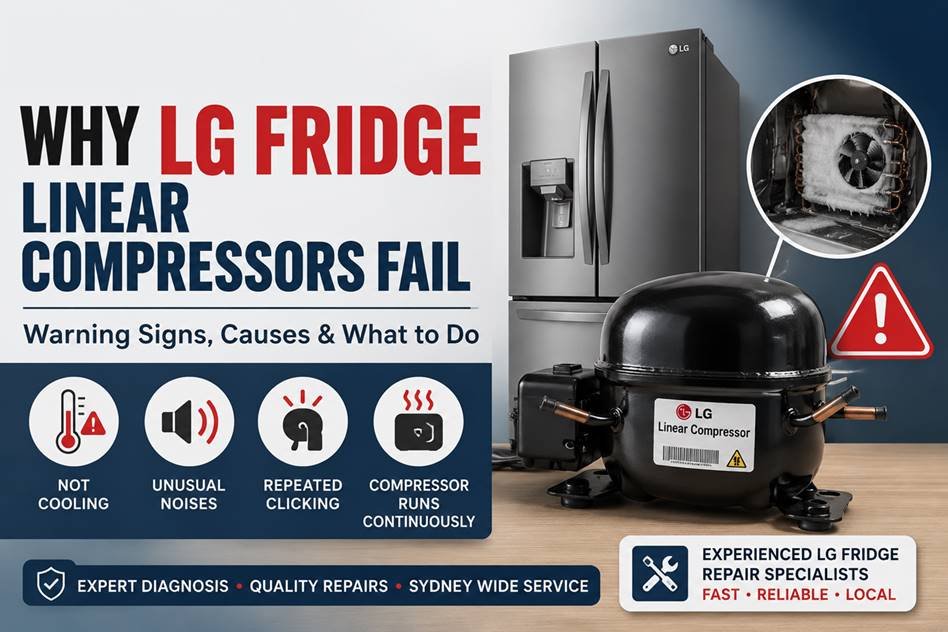
LG refrigerators are widely used in Australian homes, but like any refrigeration system, they can eventually develop cooling problems. One of the more serious faults is a problem with the compressor, particularly on models fitted with a Linear Compressor or Linear Inverter Compressor.
A compressor fault can cause symptoms such as poor cooling, a warm freezer, unusual humming or clicking, or a refrigerator that continues running without reaching the correct temperature. However, these symptoms do not automatically mean the compressor has failed. Fan motors, refrigerant leaks, blocked airflow, control components and defrost problems can produce similar symptoms.
This guide explains why LG linear compressors can develop problems, the warning signs to look for, how technicians distinguish compressor faults from other cooling problems, and when professional LG fridge repair may be required.
If your LG refrigerator is already showing cooling problems, see our dedicated LG Fridge Repairs Sydney service page for information about professional diagnosis and repair.
What Is an LG Linear Compressor?
The compressor is one of the main components in a refrigerator's sealed refrigeration system. Its job is to compress and circulate refrigerant through the system so heat can be removed from inside the refrigerator.
LG has used different compressor technologies across its refrigerator range, including Linear Compressor and Smart Inverter Compressor systems. LG describes its Smart Inverter Compressor as the heart of the refrigerator and promotes longer compressor parts coverage on eligible models.
A linear compressor operates differently from a traditional reciprocating compressor. Instead of using the conventional rotating crankshaft arrangement, the compressor uses linear movement to operate the internal piston.
The important point for homeowners is simple: when the compressor cannot produce the required refrigerant flow and pressure, the refrigerator may struggle to remove heat.
This can result in:
- Refrigerator compartment becoming warm
- Freezer temperature increasing
- Food taking longer to cool
- Compressor running for extended periods
- Poor or inconsistent cooling
- Increased operating noise
- Complete loss of cooling in severe cases
However, a technician should confirm the cause before replacing the compressor.
Why Do LG Linear Compressors Fail?
There isn't one single cause behind every compressor failure. The fault can involve mechanical components, electrical controls, refrigerant issues or another part of the refrigeration system.
Mechanical Wear
A compressor contains moving components that operate repeatedly whenever the refrigeration system runs. Over time, mechanical wear can affect the compressor's ability to compress refrigerant effectively.
If internal compression is reduced, the compressor may still appear to operate, but the refrigerator may not achieve normal cooling performance. This is one reason simply listening for compressor noise isn't enough to determine whether the compressor is healthy.
Electrical Problems
An LG refrigerator's compressor does not operate in isolation. Electrical and electronic components control its operation. Depending on the model, a problem involving the compressor's electrical supply, control system or inverter components can create symptoms that appear to be compressor failure. This is why proper diagnosis should include electrical and control checks before a compressor is condemned.
Refrigerant Leaks
A refrigerant leak can also cause cooling performance to deteriorate. When refrigerant is lost from a sealed system, the refrigeration circuit may no longer operate correctly. The compressor can continue running while the refrigerator gradually becomes warmer. This can sometimes lead homeowners to assume the compressor has failed because they can hear it operating.
A refrigerant recharge without finding and addressing the underlying leak is not a proper long-term repair.
Excessive Heat and Poor Airflow
The refrigeration system must be able to reject heat effectively. Restricted condenser airflow, heavy dust accumulation or inadequate ventilation can affect system performance and increase operating stress. The surrounding installation conditions therefore matter when diagnosing repeated compressor problems.
Warning Signs of an LG Compressor Problem
A failing compressor can produce several different symptoms.
1. LG Fridge Is Not Cooling
The most obvious symptom is a refrigerator that no longer maintains the expected temperature. The freezer may also become warmer than normal, particularly when the compressor is unable to provide sufficient refrigeration capacity.
However, a fridge not cooling is not automatically a compressor fault. Other possibilities include:
- Evaporator fan failure
- Condenser fan problem
- Defrost fault
- Refrigerant leak
- Airflow restriction
- Damaged door gasket
- Control problem
2. Compressor Runs Constantly
A refrigerator that appears to run continuously without reaching temperature may have a refrigeration problem. Possible causes include:
- Reduced compressor performance
- Refrigerant shortage
- Dirty condenser
- Poor airflow
- Door sealing problems
- Excessive heat load
- Sensor or control issues
3. Repeated Clicking
Repeated clicking from the rear of the refrigerator can indicate that the compressor is attempting to start and then shutting down. Electrical components, overload protection or the compressor itself can be involved. A technician needs to determine what is actually causing the repeated start-stop cycle.
4. Unusual Humming or Mechanical Noise
A change in the normal operating sound of the refrigerator can indicate a developing problem. Loud humming, buzzing, knocking or other unusual compressor-area noises should be investigated, especially when combined with poor cooling.
LG also notes that refrigerators can naturally produce different operating sounds as the compressor and cooling system change operation, so unusual noise should be assessed alongside the refrigerator's cooling performance rather than treated as proof of compressor failure.
5. Both Refrigerator and Freezer Are Warm
When both compartments are warming, the problem may be related to the refrigeration system itself. Potential causes include:
- Compressor fault
- Refrigerant problem
- Control fault
- Condenser problem
- Severe airflow restriction
LG Fridge Not Cooling: Is the Compressor Really the Problem?
This is one of the most important points for LG refrigerator owners: not every LG fridge that stops cooling has a failed compressor.
For example, if an evaporator fan stops working, cold air may not circulate correctly. A defrost problem can cause ice to accumulate around the evaporator and restrict airflow. A refrigerant leak can reduce cooling capacity even though the compressor continues operating. A technician should therefore look at the refrigerator as a complete refrigeration system.
| Symptom | Possible Causes |
|---|---|
| Fridge warm but freezer cold | Airflow, damper or fan problem |
| Fridge and freezer both warm | Compressor, refrigerant, control or sealed-system problem |
| Heavy ice accumulation | Defrost or airflow problem |
| Compressor silent | Electrical, control or compressor problem |
| Compressor runs continuously | Cooling capacity, airflow, refrigerant or compressor problem |
| Repeated clicking | Electrical/start or compressor-related problem |
How a Technician Diagnoses an LG Compressor Problem
Professional diagnosis is more than simply checking whether the compressor makes a noise. A refrigeration technician may assess:
- Refrigerator and freezer temperatures: Actual compartment temperatures help establish how serious the cooling problem is.
- Compressor operation: The technician checks whether the compressor starts, operates and remains running correctly.
- Fans: Evaporator and condenser fans are checked because poor airflow can produce symptoms similar to compressor failure.
- Condenser condition: Restricted airflow or excessive dirt can affect refrigeration performance.
- Evaporator frost pattern: The evaporator can provide useful information about airflow, defrost and refrigeration-system performance.
- Electrical and control components: The compressor's electrical operation and associated control components may need to be checked.
- Refrigerant and sealed system: Where appropriate, the refrigeration circuit can be assessed for signs of refrigerant loss or another sealed-system fault.
- Model and compressor information: The exact LG refrigerator model matters because compressor and control configurations can differ between models.
Can an LG Linear Compressor Be Repaired?
In many cases, a failed compressor is replaced rather than repaired internally. However, before replacing one, the technician should establish why the refrigerator is not cooling correctly.
If the actual fault is a fan motor, control component, wiring issue, refrigerant leak, defrost problem, or airflow restriction, then replacing the compressor would not solve the underlying problem.
Where a compressor replacement is required, the work involves the sealed refrigeration system and should be carried out using appropriate refrigeration equipment and procedures. A refrigerant recharge by itself should not be presented as a compressor repair.
LG Compressor Warranty in Australia
Warranty coverage is an important consideration before paying for compressor work.
LG Australia's current warranty information states that eligible refrigerator models have a standard two-year parts and labour warranty, with additional sealed-system and compressor coverage depending on the compressor type and applicable warranty terms. LG's current information lists additional coverage for eligible Linear Compressor and Smart Inverter Compressor models, but the exact terms depend on the product and warranty conditions.
LG also states that its warranty applies to products purchased in Australia and that warranty service is subject to its specific terms and conditions. Therefore, before arranging paid compressor work, check:
- LG refrigerator model number
- Serial number
- Original purchase date
- Proof of purchase
- Warranty documentation
- Current LG warranty conditions
Repair or Replace an LG Refrigerator?
A compressor problem does not automatically mean the entire refrigerator needs replacing. The decision can depend on:
- Age of the refrigerator
- Overall condition
- Compressor replacement requirements
- Availability of suitable parts
- Warranty status
- Condition of fans and controls
- Condition of door seals
- Previous repair history
- Energy efficiency
- Cost of the repair compared with replacement
For a relatively modern refrigerator in otherwise good condition, repairing the refrigeration system may make sense. For an older unit with multiple significant faults, replacement may be worth considering.
When Should You Call an LG Fridge Repair Technician?
Professional inspection is recommended when an LG refrigerator:
- Is no longer cooling properly
- Has a warm freezer
- Runs almost continuously
- Makes unusual compressor noises
- Repeatedly clicks on and off
- Has experienced a sudden loss of cooling
- Shows signs of a sealed-system problem
- Has a compressor that appears to be running but isn't cooling
- Develops recurring cooling problems after a previous repair
LG Fridge Repairs in Sydney
If your LG refrigerator is not cooling, making unusual noises or showing signs of a compressor or refrigeration-system problem, Master Fridge Repairs provides LG fridge repair services across Sydney.
Our technicians can assess the refrigerator and determine whether the problem is related to the compressor, refrigerant system, fan, controls, defrost system or another component.
Frequently Asked Questions
How do I know if my compressor is bad on my LG fridge?
Common warning signs of a failing LG refrigerator compressor include the fridge and freezer becoming warm while the fans continue running, repeated clicking from the rear of the refrigerator, no compressor vibration or sound, or an unusually hot compressor area. A compressor can also run continuously without bringing the cabinet down to the correct temperature. However, these symptoms can also be caused by refrigerant leaks, control faults, airflow problems or other sealed-system issues, so proper testing is needed before replacing the compressor.
What is the expected lifespan of the LG linear compressor in a refrigerator?
The lifespan of an LG linear compressor varies depending on the model, operating conditions, maintenance and the condition of the sealed refrigeration system. Some compressors can operate for many years, while certain LG models have experienced premature compressor failures. If an LG fridge starts losing cooling within the first few years, the compressor should be properly diagnosed rather than assuming it has simply reached the end of its normal service life.
Is it worth replacing the compressor on an LG refrigerator?
Compressor replacement can be worthwhile when the refrigerator is otherwise in good condition, particularly when the cabinet, electronics, fans and other major components are working properly. The decision depends on the refrigerator's age, overall condition, repair cost and expected remaining service life. A technician should confirm that the compressor is actually faulty before recommending replacement, as a refrigerant leak, blocked airflow or another sealed-system fault can produce similar cooling symptoms.
What are the common problems with LG linear compressors in refrigerators?
Common problems associated with LG linear compressors include loss of compression, mechanical wear, electrical failure and problems within the sealed refrigeration system. A failing compressor may cause poor or complete loss of cooling, continuous operation, unusual sounds or repeated starting and stopping. Because similar symptoms can occur with refrigerant leaks and other refrigeration faults, accurate diagnosis is important before replacing the compressor. For local assistance, see our LG Fridge Repairs Sydney service page.
Need Fast LG Refrigerator Repairs?
Get fast, professional diagnostics and repairs for your LG fridge in Sydney.
Call 0401 065 051