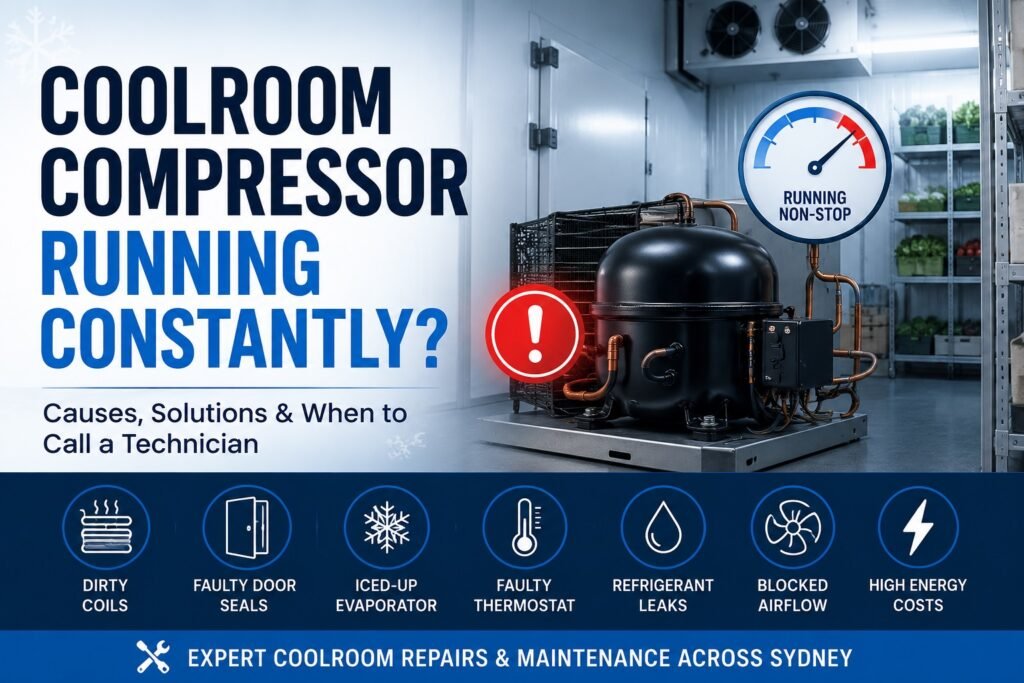
A coolroom compressor is designed to cycle on and off as it maintains the correct storage temperature. When the desired temperature is reached, the compressor should stop running until additional cooling is needed. If your compressor runs continuously without switching off, it usually indicates an underlying refrigeration problem rather than normal operation.
For restaurants, cafes, supermarkets, food manufacturers and commercial kitchens, a continuously running compressor should never be ignored. Not only does it increase electricity costs, but it also places constant strain on one of the most expensive components in the refrigeration system. Left unresolved, the problem can lead to compressor failure, inconsistent cooling, food spoilage and costly business downtime.
At Master Fridge Repairs, compressor issues are one of the most common coolroom faults we diagnose across Sydney. While some specialised refrigeration systems equipped with inverter technology or Variable Speed Drives (VSD) are designed to operate continuously under controlled conditions, most standard commercial coolrooms should cycle normally. If yours never seems to stop running, professional diagnosis is recommended before a minor issue becomes a major repair.
How a Coolroom Compressor Should Normally Operate
The compressor is the heart of your coolroom’s refrigeration system. Its job is to circulate refrigerant throughout the sealed system, removing heat from inside the coolroom and releasing it outside through the condenser.
During normal operation, the process follows a continuous cycle:
- The thermostat or temperature controller detects that the cabinet temperature has risen.
- The compressor starts and pumps refrigerant through the system.
- The evaporator absorbs heat from inside the coolroom.
- The condenser releases that heat into the surrounding air.
- Once the target temperature is reached, the thermostat signals the compressor to switch off.
This cycling process allows the compressor to cool efficiently while reducing wear on internal components.
Longer operating periods can be expected during hot summer weather, after large deliveries of warm stock, or when doors are opened frequently. However, if the compressor continues running for hours without stopping under normal conditions, there is usually an underlying fault affecting the refrigeration system.
Signs Your Coolroom Compressor Is Running Too Long
A compressor that never switches off often gives several warning signs before a complete breakdown occurs.
You may notice:
- The compressor runs day and night without cycling off.
- Electricity bills have increased noticeably.
- The coolroom struggles to maintain the correct temperature.
- Food takes longer to cool.
- The compressor feels unusually hot.
- Cabinet temperatures fluctuate.
- Frost begins forming on evaporator coils.
- Cooling performance gradually declines.
- The refrigeration system sounds louder than usual.
- The compressor frequently overheats.
These symptoms often develop gradually, making them easy to overlook until cooling performance becomes unreliable.
Ignoring these early warning signs can result in unnecessary energy consumption and significantly shorten the life of the compressor.
Why a Compressor That Runs Continuously Is a Problem
Many business owners assume that if the coolroom is still cold, everything is working properly. In reality, a compressor that never stops running is often working harder than it should because another component within the refrigeration system is no longer operating efficiently.
Continuous operation can lead to:
- Increased electricity consumption
- Premature compressor wear
- Higher operating temperatures
- Reduced cooling efficiency
- More frequent refrigeration breakdowns
- Shorter equipment lifespan
- Increased repair costs
- Food safety risks due to unstable temperatures
Because the compressor is one of the most expensive components to replace, identifying the cause early can often save thousands of dollars in future repairs.
Common Causes of a Continuously Running Coolroom Compressor
There are several reasons why a commercial coolroom compressor may continue operating without shutting off. Proper diagnosis is important because different faults can produce similar symptoms.
Refrigerant Leaks
Low refrigerant is one of the most common reasons a compressor runs continuously.
When refrigerant leaks from the sealed system, there is less cooling capacity available to remove heat from the coolroom. As a result, the compressor continues operating in an attempt to reach the desired temperature but never fully succeeds.
Signs of a refrigerant leak may include:
- Poor cooling performance
- Longer compressor run times
- Ice forming on evaporator coils
- Warm cabinet temperatures
- Higher electricity usage
Simply adding more refrigerant is not a permanent solution. The source of the leak should first be located and repaired before the system is recharged by a licensed refrigeration technician.
Dirty Condenser Coils
The condenser removes heat from the refrigeration system. Over time, dust, grease and airborne debris accumulate on the condenser coils, particularly in busy commercial kitchens.
When the coils become dirty, heat cannot escape efficiently, forcing the compressor to run for much longer than normal.
Dirty condenser coils can cause:
- Higher compressor temperatures
- Reduced cooling efficiency
- Increased energy consumption
- Longer operating cycles
- Premature compressor failure
Routine condenser cleaning is one of the simplest and most effective ways to improve refrigeration efficiency and reduce unnecessary compressor workload.
Worn Door Gaskets and Poor Door Seals
A damaged door gasket allows warm, humid air to enter the coolroom every minute of the day.
As warm air enters, the refrigeration system must continuously remove the additional heat, forcing the compressor to work much harder.
Common symptoms include:
- Condensation around the door
- Excessive frost build-up
- Longer cooling times
- Compressor running continuously
- Higher electricity costs
Even a small gap in the door seal can have a significant impact on refrigeration performance over time.
Iced-Up Evaporator Coils
The evaporator coil is responsible for absorbing heat from inside the coolroom. If ice builds up across the coil, airflow becomes restricted and the refrigeration system cannot remove heat efficiently. To compensate, the compressor continues running almost constantly in an attempt to reach the set temperature.
Common causes of evaporator icing include:
- Defrost system failure
- Faulty defrost heater
- Defrost timer problems
- Defrost sensor faults
- Damaged door seals allowing excess moisture inside
- Frequent door openings
Warning signs include:
- Thick ice covering the evaporator
- Weak airflow inside the coolroom
- Warm cabinet temperatures
- Frost forming on products
- Compressor running continuously
Simply defrosting the unit may temporarily restore cooling, but if the underlying cause is not repaired, the ice will quickly return.
Faulty Thermostat or Temperature Controller
Your thermostat or electronic temperature controller tells the compressor when to start and stop.
If the controller becomes faulty or the temperature sensor loses calibration, it may incorrectly detect that the coolroom is still too warm, causing the compressor to continue operating even after the correct temperature has been reached.
Signs of thermostat problems include:
- Compressor never switching off
- Temperature fluctuations
- Products freezing unexpectedly
- Display showing incorrect temperatures
- Erratic compressor cycling
Professional testing can determine whether the fault lies with the thermostat, controller, sensor or associated wiring.
Also Read:
Coolroom Door Seal Failure | Causes – Warning Signs & When to Replace the Gasket
Blocked Airflow Inside the Coolroom
Cold air must circulate freely throughout the coolroom to maintain consistent temperatures.
When cartons, pallets or shelving block evaporator vents, cold air cannot move properly through the room. Warm areas develop, causing the thermostat to continue calling for cooling and forcing the compressor to run longer than necessary.
Common airflow problems include:
- Boxes stacked against evaporator vents
- Overloaded shelving
- Poor product arrangement
- Restricted return air pathways
- Obstructed circulation fans
Keeping airflow pathways clear allows the refrigeration system to cool evenly and reduces unnecessary compressor run time.
Evaporator Fan Motor Failure
The evaporator fan circulates cold air throughout the coolroom. If the fan slows down or stops working altogether, cold air remains trapped around the evaporator instead of reaching the entire room.
As a result, the thermostat may continue detecting warm temperatures and the compressor keeps running continuously.
Symptoms include:
- Uneven temperatures
- Warm spots
- Weak airflow
- Ice build-up
- Constant compressor operation
- Fan making unusual noises
Replacing a worn fan motor early often prevents more expensive refrigeration repairs later.
High Ambient Temperatures
Commercial kitchens often become extremely hot, particularly during busy service periods.
If the condenser is installed in a poorly ventilated plant room or near cooking equipment, it may struggle to release heat efficiently.
This forces the refrigeration system to operate for much longer periods.
High ambient temperatures are commonly caused by:
- Poor ventilation
- Hot commercial kitchens
- Blocked condenser airflow
- Dirty condenser coils
- Summer heatwaves
Improving airflow around the condenser can significantly improve refrigeration efficiency.
Compressor Wear and Mechanical Failure
Like any mechanical component, compressors gradually wear over time.
As internal valves, bearings and moving parts deteriorate, the compressor becomes less efficient at compressing refrigerant. It must therefore run longer to achieve the same cooling performance.
Signs of compressor wear include:
- Continuous operation
- Clicking noises
- Hard starting
- Reduced cooling
- High operating temperatures
- Increased electricity consumption
A licensed refrigeration technician can perform pressure testing and performance checks to determine whether the compressor itself is failing or another component is causing the problem.
Modern Continuous-Run Refrigeration Systems
Not every continuously running compressor indicates a fault.
Some specialised commercial refrigeration systems are intentionally designed to operate almost continuously.
Modern equipment used in refrigerated warehouses, food distribution centres and constant-temperature storage facilities may utilise:
- Inverter compressors
- Variable Speed Drives (VSD)
- Digital capacity control
- Electronic expansion valves
- Smart energy management systems
Instead of repeatedly starting and stopping, these systems automatically adjust compressor speed to match cooling demand. This improves energy efficiency, reduces wear on components and provides more stable temperatures.
However, most standard commercial coolrooms used in restaurants, cafes, bakeries and supermarkets are designed to cycle on and off during normal operation. If these systems suddenly begin running continuously, professional inspection is recommended.
What You Can Check Before Calling a Technician
Some causes of continuous compressor operation can be identified through simple visual inspections.
You can safely check:
- Clean any dust from condenser coils.
- Inspect door gaskets for gaps or damage.
- Ensure products are not blocking evaporator vents.
- Reduce unnecessary door openings.
- Confirm the thermostat is set correctly.
- Check whether excessive ice has formed on the evaporator.
- Verify condenser airflow is unobstructed.
Avoid attempting refrigerant repairs or electrical work yourself, as these require specialised equipment and must be carried out by a licensed refrigeration technician.
Also Read:
Frozen Coolroom Drain Lines: Causes, Fixes & How to Prevent Water Leaks This Winter
When to Call a Commercial Refrigeration Technician
If your compressor has been running continuously for several hours despite normal operating conditions, professional diagnosis should not be delayed.
Arrange an inspection if you notice:
- Compressor never switches off
- Cabinet not reaching temperature
- Rising electricity bills
- Ice building on evaporator coils
- Warm food storage temperatures
- Refrigerant leaks
- Unusual compressor noises
- Error codes on the controller
- Temperature fluctuations
- Poor cooling performance
Early diagnosis often prevents compressor failure and significantly reduces repair costs.
How Master Fridge Repairs Can Help
At Master Fridge Repairs, we specialise in diagnosing and repairing commercial refrigeration systems throughout Sydney.
When investigating a continuously running compressor, our technicians inspect the complete refrigeration system rather than focusing on a single component.
Our diagnosis may include:
- Refrigerant pressure testing
- Leak detection
- Compressor performance testing
- Condenser cleaning
- Evaporator inspection
- Fan motor testing
- Thermostat and controller diagnostics
- Temperature sensor calibration
- Defrost system testing
- Door gasket inspection
- Airflow assessment
- Electrical safety testing
By identifying the actual cause of the problem, we help businesses avoid unnecessary parts replacement and restore reliable cooling performance as quickly as possible.
Preventative Maintenance Helps Prevent Continuous Compressor Operation
Routine servicing is the most effective way to reduce compressor workload and extend the life of your refrigeration equipment.
Regular maintenance should include:
- Cleaning condenser coils
- Inspecting refrigerant pressures
- Checking fan motors
- Testing thermostats and controllers
- Inspecting door seals
- Verifying defrost operation
- Monitoring cabinet temperatures
- Checking electrical components
- Ensuring unrestricted airflow
Preventative servicing not only improves energy efficiency but also helps identify developing faults before they result in costly breakdowns or food spoilage.
Final Thoughts
A coolroom compressor that runs continuously is rarely something to ignore. While longer operating times can occur during hot weather or periods of heavy use, a compressor that never cycles off is usually signalling an underlying refrigeration issue. Problems such as refrigerant leaks, dirty condenser coils, blocked airflow, faulty thermostats or worn door seals can all force the system to work harder than necessary, increasing energy consumption and placing unnecessary strain on the compressor.
If your coolroom compressor is running non-stop, Master Fridge Repairs can identify the root cause and restore efficient, reliable performance. Our licensed refrigeration technicians provide professional coolroom diagnostics and repairs across Sydney, helping businesses minimise downtime, reduce operating costs and protect valuable refrigerated stock before a minor issue becomes a major breakdown.
Need Reliable Fridge and Coolroom Repairs?
Fast, professional refrigeration repairs for homes and businesses. Contact our experienced technicians today.