
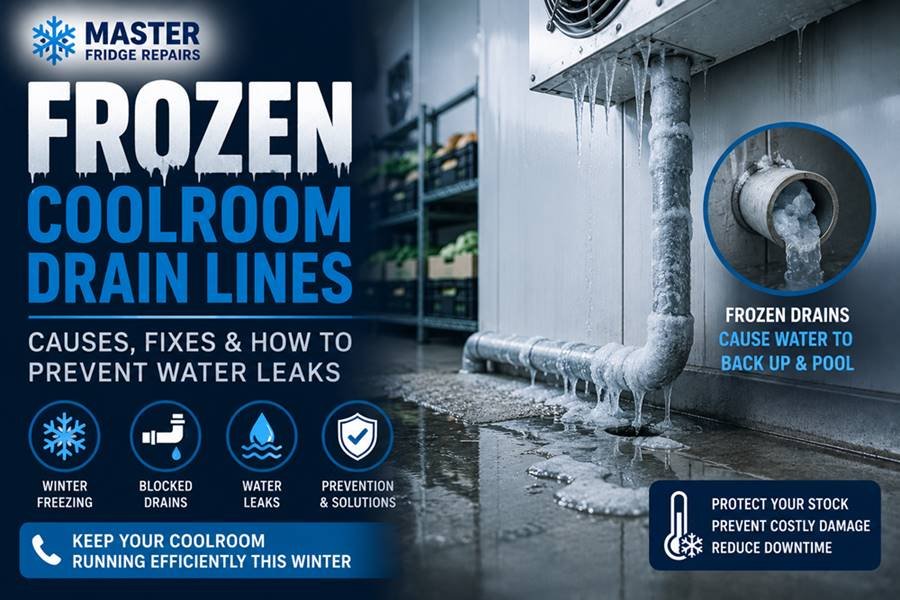
Is Water Pooling Inside Your Coolroom?
Have you noticed water collecting on the coolroom floor, ice forming around the evaporator, or moisture dripping inside the cabinet during winter?
One of the most overlooked causes is a frozen drain line. Every commercial coolroom produces moisture as part of its normal refrigeration cycle. During defrost, this water should flow safely through the drain line and away from the refrigeration system. However, when outdoor temperatures drop, exposed drain pipes can freeze, creating a blockage that prevents water from draining properly.
Instead of flowing away, the water backs up into the coolroom, leading to puddles, ice build-up, unpleasant odours and, in severe cases, damage to stored products and refrigeration components.
At Master Fridge Repairs, we regularly diagnose frozen drain lines and winter-related refrigeration issues for restaurants, cafes, supermarkets, commercial kitchens, florists, food distributors and other businesses across Sydney.
Why Do Coolroom Drain Lines Freeze?
Every commercial coolroom periodically enters a defrost cycle to remove frost from the evaporator coils. During this process, the melted frost turns into water and flows through a condensate drain line before exiting the refrigeration system.
During winter, particularly in outdoor installations or coolrooms connected to exposed pipework, temperatures can fall low enough for water inside the drain line to freeze.
Once ice forms inside the pipe, the drain becomes partially or completely blocked, preventing future defrost water from escaping. As additional defrost cycles occur, water continues to accumulate inside the coolroom until noticeable problems develop.
Common Signs of a Frozen Coolroom Drain Line
A blocked drain line often develops gradually before becoming a major issue. Watch for these common warning signs:
- Water pooling on the coolroom floor
- Ice forming beneath the evaporator
- Excessive frost around the drain opening
- Water dripping from ceiling panels
- Slippery floors inside the coolroom
- Musty smells caused by standing water
- Ice build-up around drain outlets
- Repeated water leaks after each defrost cycle
- Temperature fluctuations caused by restricted airflow
Addressing these symptoms early helps prevent more costly refrigeration repairs.
What Causes Drain Lines to Freeze?
Several factors contribute to frozen drain lines during colder weather.
Low Outdoor Temperatures
Many commercial coolrooms discharge condensate through external pipework. When outside temperatures fall significantly, standing water inside these pipes can freeze before it drains away.
Blocked Drain Lines
Food debris, grease, packaging materials or biological growth can partially block the drain. Water then sits inside the pipe for longer periods, making it far more likely to freeze.
Poor Drain Pipe Insulation
Drain lines installed without adequate insulation lose heat rapidly during winter, increasing the chance of ice formation.
Incorrect Drain Line Installation
Drain pipes that lack sufficient fall or contain low points allow water to collect rather than drain completely. Standing water freezes much faster than flowing water.
Faulty Defrost System
If the defrost cycle isn’t operating correctly, excessive frost can melt all at once or create abnormal amounts of water, overwhelming the drainage system.
Why Frozen Drain Lines Should Never Be Ignored
Although a blocked drain may seem like a minor maintenance issue, it can quickly affect the performance of the entire refrigeration system.
Ignoring frozen drain lines can result in:
- Water damage inside the coolroom
- Ice accumulation around evaporator coils
- Reduced airflow
- Poor cooling performance
- Product spoilage
- Slip hazards for staff
- Mould and bacterial growth
- Increased compressor workload
- Higher electricity costs
For hospitality and food businesses, even small water leaks can create hygiene and food safety concerns.
How to Fix a Frozen Coolroom Drain Line
The correct repair depends on the cause of the blockage.
Professional refrigeration technicians may:
- Safely thaw the frozen drain line
- Remove ice blockages
- Clear food debris and sediment
- Flush the condensate drain
- Inspect drain pipe fall
- Repair damaged drain tubing
- Replace blocked drain fittings
- Test the defrost system
- Check evaporator operation
- Confirm proper water drainage
Simply pouring hot water into the drain rarely provides a permanent solution if the underlying cause remains.
Preventing Frozen Drain Lines During Winter
Routine preventative maintenance is the most effective way to avoid winter drain problems.
We recommend:
Clean the Drain Regularly
Remove debris before it builds up and restricts water flow.
Inspect During Every Service
Drain lines should be checked whenever your commercial refrigeration system receives preventative maintenance.
Install Drain Line Heaters
For exposed external pipework, trace heating or pipe heaters help prevent water from freezing inside the drain.
Insulate Exposed Pipework
Quality insulation reduces heat loss and protects drain lines from freezing temperatures.
Check the Defrost System
A correctly functioning defrost timer, heater and sensor help regulate moisture production and improve drainage.
Can Frozen Drain Lines Affect Coolroom Temperature?
Yes.
When water freezes around the evaporator or airflow passages, air circulation becomes restricted.
This can lead to:
- Uneven cooling
- Temperature fluctuations
- Ice accumulation
- Longer compressor run times
- Higher energy consumption
- Reduced refrigeration efficiency
What starts as a simple blocked drain can eventually affect the overall performance of the refrigeration system.
Professional Coolroom Drain Repairs Across Sydney
Master Fridge Repairs provides professional commercial coolroom repairs for businesses throughout Sydney.
We diagnose and repair:
- Frozen drain lines
- Blocked condensate drains
- Water leaks
- Defrost system faults
- Ice build-up
- Temperature fluctuations
- Refrigerant problems
- Compressor faults
- Fan motor failures
- Commercial refrigeration breakdowns
Our licensed refrigeration technicians service restaurants, cafes, supermarkets, bakeries, bottle shops, hotels, food manufacturers and other commercial facilities.
Prevent Costly Water Damage Before It Starts
A frozen drain line may appear to be a small issue, but if left untreated it can lead to expensive refrigeration repairs, food spoilage and unnecessary business downtime.
If you’ve noticed water pooling inside your coolroom or suspect a blocked drain line, don’t wait until the problem worsens.
Master Fridge Repairs provides fast commercial refrigeration repairs across Sydney, including same-day service where available. Call 0401 065 051 today for a free quote and let our experienced refrigeration technicians restore your coolroom before minor drainage issues become major repairs.
Frequently Asked Questions
Why is water pooling inside my coolroom?
Water pooling inside a coolroom is often caused by a blocked or frozen condensate drain line, preventing defrost water from draining away properly.
Can cold weather freeze coolroom drain lines?
Yes. During winter, exposed external drain pipes can freeze, especially if they lack insulation or drain line heaters.
How do I stop my coolroom drain from freezing?
Regular drain cleaning, proper insulation, and installing trace heating or pipe heaters on exposed drain lines are the most effective ways to prevent freezing.
Can a blocked drain affect coolroom performance?
Yes. Blocked drains can cause ice build-up, restricted airflow, temperature fluctuations, water leaks and increased compressor workload.
Should I repair a frozen drain line immediately?
Yes. Prompt repairs help prevent water damage, food safety risks, mould growth and more expensive refrigeration system failures.