A coolroom door seal might seem like a small component, but it plays a critical role in maintaining stable temperatures and protecting perishable stock. When the gasket no longer forms an airtight seal, warm, humid air enters the coolroom every time the door closes. The result is excessive condensation, frost build-up, longer compressor run times and rising electricity costs.
At Master Fridge Repairs, we regularly repair coolrooms across Sydney where a worn or damaged door seal has contributed to poor cooling performance and unnecessary strain on the refrigeration system. Recognising the early warning signs can help prevent costly breakdowns and food spoilage.
What Does a Coolroom Door Seal Do?
A coolroom door seal, also known as a gasket, creates an airtight barrier between the refrigerated space and the warmer environment outside. This seal prevents cold air from escaping while stopping heat and moisture from entering the coolroom.
A properly functioning gasket helps:
- Maintain consistent food-safe temperatures
- Reduce compressor workload
- Prevent condensation and ice formation
- Improve energy efficiency
- Protect stored food and beverages
- Extend the life of the refrigeration system
Once the seal begins to fail, the entire refrigeration system must work harder to compensate for the continuous loss of cold air.
Common Signs of a Failing Coolroom Door Seal
Door seal problems usually develop gradually rather than overnight. Identifying these warning signs early can help avoid more serious refrigeration issues.
Frost or Ice Around the Door
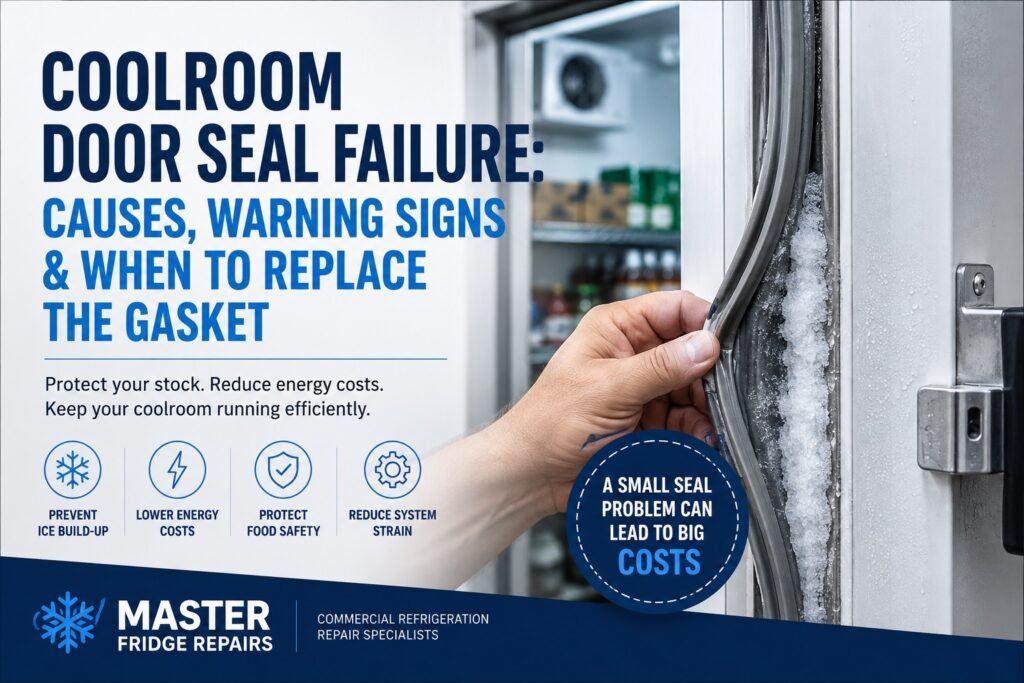
Ice forming around the door frame or inside the coolroom often indicates warm, moist air is leaking through damaged sections of the gasket. As this moisture cools, it freezes and gradually builds into thicker layers of ice.
Condensation Around the Entrance
Water droplets on the door frame, surrounding walls or floor are common signs that humid air is entering through gaps in the seal.
If left unresolved, excess moisture can create slip hazards, encourage mould growth and damage surrounding building materials.
Rising Electricity Bills
When cold air continually escapes, the compressor must run longer to maintain the desired temperature.
A damaged gasket can significantly increase power consumption, especially in restaurants, cafes and commercial kitchens where coolroom doors are opened frequently throughout the day.
Compressor Running Constantly
One of the most noticeable symptoms is a compressor that rarely cycles off.
Instead of reaching the target temperature and resting, the refrigeration system operates continuously because warm air keeps entering the coolroom.
This increases wear on major refrigeration components and may eventually lead to compressor failure.
Temperature Fluctuations
If your coolroom struggles to maintain a consistent temperature, a leaking door seal may be allowing warm air to disrupt the refrigeration cycle.
Temperature fluctuations can reduce food quality and place businesses at risk of failing food safety requirements.
What Causes Coolroom Door Seal Failure?
Door gaskets are designed to withstand years of daily use, but commercial environments place them under constant pressure.
Normal Wear and Tear
Thousands of door openings every year gradually flatten the gasket, reducing its ability to create a tight seal.
Mechanical Damage
Delivery trolleys, pallets and equipment frequently bump into coolroom doors.
These impacts can tear, stretch or permanently deform the rubber gasket.
Dirty Door Seals
Grease, food residue and dust often build up around commercial coolroom doors.
Over time, this debris prevents the gasket from sitting flush against the frame and accelerates deterioration.
Regular cleaning helps preserve the seal while improving hygiene.
Worn Hinges and Door Latches
Sometimes the gasket isn’t the real problem.
Loose hinges or worn latches can cause the door to sag slightly, preventing the gasket from sealing evenly around the frame.
Harsh Cleaning Chemicals
Using abrasive cleaners or oil-based products can dry out rubber gaskets, causing cracking, brittleness and permanent deformation.
Always follow the manufacturer’s cleaning recommendations.
Cold Weather and Temperature Extremes
Constant exposure to freezing temperatures eventually hardens many rubber door seals.
As the material loses flexibility, small cracks develop and allow cold air to escape.
How to Check Your Coolroom Door Seal
Regular inspections can identify problems before they affect cooling performance.
The Paper Test
Place a sheet of paper between the door and the frame before closing the door.
Gently pull the paper.
If it slides out with almost no resistance, the gasket may no longer be sealing properly at that point.
Repeat the test around the entire door.
Visual Inspection
Inspect the gasket for:
- Cracks
- Tears
- Flattened sections
- Brittleness
- Mould
- Loose corners
- Gaps between the gasket and frame
Even small defects can allow significant amounts of warm air into the coolroom.
Check the Bottom Door Sweep
The lower section of the door often experiences the greatest wear.
Look for dragging, tearing or missing sections that allow outside air to enter beneath the door.
Watch for Light
With the coolroom lights switched on, close the door and check from outside.
If light is visible around the edges of the door, the seal may no longer be airtight.
Why You Shouldn’t Ignore a Damaged Door Seal
Many businesses continue operating with damaged gaskets because the coolroom still appears to be cooling.
Unfortunately, hidden problems continue developing behind the scenes.
A leaking door seal can lead to:
- Higher electricity costs
- Ice build-up
- Excess condensation
- Compressor overwork
- Reduced cooling efficiency
- Product spoilage
- Food safety risks
- Shortened equipment lifespan
- Increased maintenance costs
Replacing a relatively inexpensive gasket early is often far more economical than repairing a compressor that has been forced to work continuously for months.
Can a Coolroom Door Seal Be Repaired?
Minor issues such as dirt build-up or slight door misalignment can sometimes be corrected through cleaning or hinge adjustments.
However, if the gasket has become cracked, brittle, torn or permanently compressed, replacement is usually the most effective long-term solution.
A properly fitted replacement gasket restores the airtight seal, improves refrigeration efficiency and helps the entire system operate as intended.
Preventing Future Door Seal Problems
Routine maintenance helps maximise gasket life and improve overall refrigeration performance.
We recommend:
- Cleaning door seals regularly with mild detergent
- Inspecting gaskets during routine servicing
- Avoiding harsh chemical cleaners
- Checking hinges and door alignment
- Closing doors gently rather than slamming them
- Replacing damaged seals promptly
- Scheduling preventative commercial refrigeration servicing
Simple maintenance can significantly reduce emergency repairs while improving energy efficiency.
When to Call a Coolroom Repair Specialist
If your coolroom is developing frost around the door, struggling to maintain temperature or running continuously, don’t assume the refrigeration system is failing.
A worn or damaged door seal may be allowing warm air into the coolroom, forcing every refrigeration component to work harder than necessary.
Master Fridge Repairs provides professional Coolroom Repairs across Sydney, diagnosing everything from damaged door gaskets and faulty hinges to refrigeration system faults, compressors, evaporators and temperature controllers.
Our licensed refrigeration technicians help restaurants, cafes, supermarkets, commercial kitchens and food businesses restore reliable cooling while protecting valuable stock and reducing operating costs.
Need professional coolroom repairs in Sydney?
Call Master Fridge Repairs on 0401 065 051 for a free phone quote and same-day service where available.