Most people expect fridge problems during hot weather, but winter can also create serious issues for refrigerators and freezers. Cold room temperatures, moisture changes, poor ventilation, worn door seals, and garage placement can all affect how a fridge operates.
A refrigerator is designed to maintain a controlled internal temperature, but the surrounding environment plays a bigger role than many people realise. When winter conditions affect sensors, airflow, seals, or defrost systems, your fridge may stop cooling properly, your freezer may start thawing, or water may begin leaking inside or underneath the unit.
In this guide, Master Fridge Repairs explains the most common winter fridge problems, why they happen, what you can check safely, and when it is time to call a professional fridge technician.
Why Fridges Can Have Problems In Winter
A fridge does not simply “make things cold.” It monitors temperatures, cycles the compressor, moves air through internal compartments, and removes heat from inside the cabinet.
During winter, the surrounding temperature can interfere with this process, especially if the fridge is placed in a garage, laundry, shed, outdoor area, or poorly insulated room.
Common winter-related causes include:
- Cold room temperatures confusing the thermostat
- Freezer compartments warming up unexpectedly
- Moisture turning into frost or ice
- Door seals becoming less effective
- Defrost drains freezing or blocking
- Compressors running longer than normal
- Poor airflow around the fridge
- Temperature sensors struggling to read correctly
Some of these problems are minor at first, but they can lead to spoiled food, higher power bills, damaged parts, or complete cooling failure if ignored.
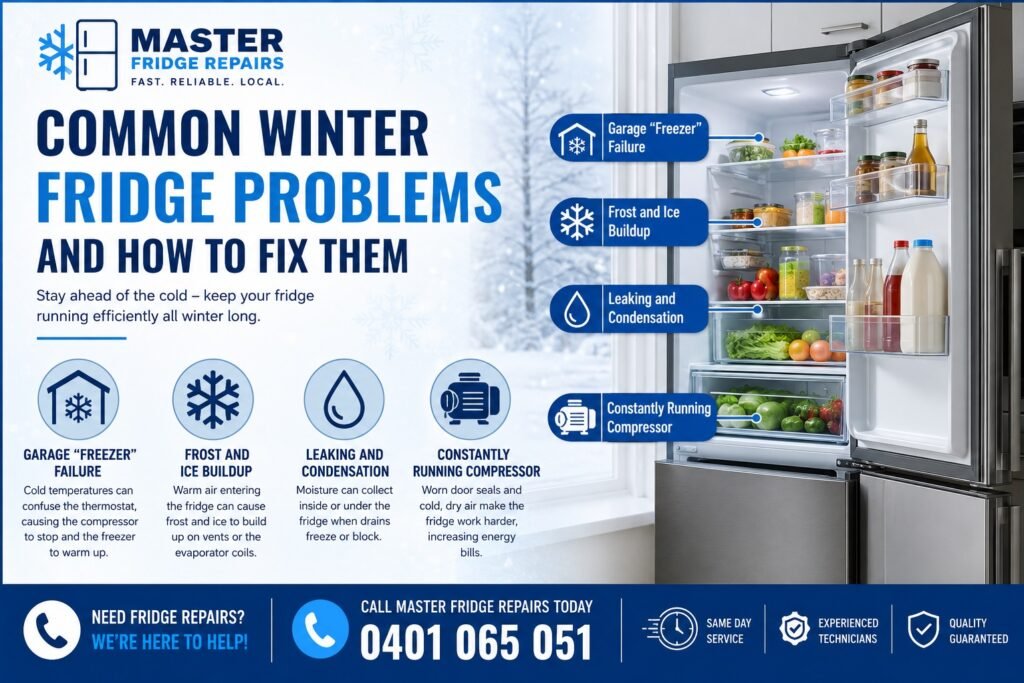
1. Garage Fridge Freezer Not Working In Cold Weather
One of the most confusing winter fridge problems is when a fridge in the garage appears fine, but the freezer section starts thawing.
This often happens with standard fridge-freezer models that use a thermostat located in the fridge compartment. When the surrounding room temperature drops too low, the fridge section may think it is already cold enough. As a result, the compressor stops running or cycles less often.
The problem is that the freezer still needs the compressor to run to stay frozen. If the compressor does not operate enough, the freezer temperature can rise and frozen food may begin to thaw.
Common Signs
- Freezer food becoming soft
- Ice cream melting
- Freezer temperature rising
- Fridge section still feels cool
- Compressor not running often
- Problem happens mainly during cold nights
Why It Happens
Many household fridges are not designed to operate in very cold garage conditions. When ambient temperatures drop too low, the thermostat may not trigger normal compressor operation.
What You Can Check
- Check the fridge manual for minimum operating temperature
- Move the fridge to a more temperature-stable area if possible
- Avoid placing household fridges in uninsulated garages
- Monitor freezer temperature with a thermometer
- Keep airflow clear around the fridge
When To Call A Technician
If the freezer continues thawing, the fridge may need inspection for thermostat faults, sensor issues, compressor operation problems, or airflow faults. A technician can confirm whether the issue is environmental or mechanical.
2. Frost And Ice Build-Up Inside The Fridge Or Freezer
Frost and ice build-up are common in winter, especially when warm indoor air mixes with cold fridge air or when the defrost system is not working correctly.
A small amount of frost in some freezer areas may be normal, but heavy frost, ice around vents, or frozen evaporator coils usually point to a problem.
Common Signs
- Ice forming around freezer vents
- Frost covering food packaging
- Fridge section becoming too cold
- Freezer drawer difficult to open
- Evaporator area icing over
- Fan noise caused by ice hitting the blade
- Uneven cooling inside the fridge
Common Causes
- Damaged door seals allowing moist air inside
- Door not closing properly
- Defrost heater failure
- Faulty defrost thermostat
- Blocked airflow
- Evaporator fan problems
- Frequent door opening
- Overloaded fridge or freezer compartments
Why It Matters
Ice build-up can block airflow inside the fridge and freezer. Once airflow is restricted, the fridge may stop cooling evenly, the compressor may run longer, and the fan motor may come under extra strain.
What You Can Check
- Make sure the door closes firmly
- Inspect the door seal for cracks or gaps
- Avoid overloading vents with food
- Do not place hot food directly inside the fridge
- Check whether frost returns quickly after defrosting
When To Call A Technician
If frost returns soon after cleaning or defrosting, the issue is likely connected to the defrost system, airflow, door seals, or evaporator fan. Professional fridge repair is recommended before the problem damages other components.
3. Fridge Leaking Water Or Building Condensation In Winter
Water leaks and condensation are often linked to temperature imbalance, blocked drains, damaged door seals, or frozen defrost lines.
During winter, indoor heating and cold external air can create moisture changes around the fridge. If the fridge is not sealing correctly or the defrost drain becomes blocked, water may collect inside the cabinet, drip into crisper drawers, or pool underneath the appliance.
Common Signs
- Water pooling under the fridge
- Moisture inside the fridge
- Water collecting in crisper drawers
- Ice forming near the drain hole
- Condensation around the door
- Wet shelves or food packaging
- Musty smell inside the fridge
Common Causes
- Blocked defrost drain
- Frozen drain line
- Damaged or loose door seal
- Door not closing properly
- Temperature sensor faults
- Excess condensation from warm air entering
- Poor fridge level or drainage angle
Why It Matters
Water leaks should not be ignored. Moisture can damage flooring, cabinetry, internal fridge parts, and electrical components. In commercial settings, leaks can also create safety risks.
What You Can Check
- Clean moisture from shelves and drawers
- Check whether the door seal is closing properly
- Make sure food is not blocking internal vents
- Avoid leaving the door open for long periods
- Look for ice around the drain area
When To Call A Technician
If water keeps returning, the drain may be blocked or frozen, the defrost system may not be operating properly, or the door seal may need repair or replacement.
4. Fridge Compressor Running Constantly In Winter
A fridge compressor should cycle on and off during normal operation. If it runs constantly, the fridge may be struggling to maintain temperature.
Many people associate this problem with summer heat, but it can also happen in winter when door seals are worn, airflow is poor, or the fridge is working harder to compensate for temperature instability.
Common Signs
- Fridge rarely switches off
- Higher electricity bills
- Motor noise running for long periods
- Fridge feels too cold or not cold enough
- Compressor area feels very hot
- Food freezing in the fridge section
- Temperature keeps changing
Common Causes
- Worn door seals
- Dirty condenser coils
- Poor ventilation around the fridge
- Thermostat faults
- Temperature sensor problems
- Refrigerant issues
- Compressor strain
- Overloaded fridge compartments
Why Door Seals Matter
A worn door seal allows air to escape and warm air to enter the cabinet. Even in winter, this can make the fridge work harder than necessary. The compressor then runs longer to maintain the correct internal temperature.
What You Can Check
- Inspect the door seal for cracks, gaps, or loose sections
- Clean dust around condenser coils if accessible
- Leave space around the fridge for ventilation
- Avoid overfilling shelves
- Check whether the fridge door closes firmly
When To Call A Technician
If the compressor keeps running after basic checks, the fridge may need professional diagnosis. Continuing to use it in this condition can increase power usage and shorten compressor lifespan.
Quick Winter Fridge Troubleshooting Checklist
Before calling a technician, you can safely check a few simple things:
- Make sure the fridge door closes properly
- Check for damaged or dirty door seals
- Avoid blocking internal air vents with food
- Keep the fridge away from very cold garage conditions
- Clean visible moisture and check if it returns
- Listen for unusual fan or compressor noises
- Check whether frost returns quickly after defrosting
- Make sure the fridge has proper ventilation around it
- Use a fridge thermometer to monitor temperature
If the same problem keeps coming back, the issue is likely more than a simple cleaning or placement problem.
When Winter Fridge Problems Need Professional Repair
Some fridge issues can be caused by basic placement or cleaning problems, but many require proper fault-finding.
You should call a fridge technician if:
- The freezer is thawing
- The fridge is not cooling properly
- Frost returns quickly after defrosting
- Water keeps leaking inside or underneath the fridge
- The compressor runs constantly
- The fridge trips power
- The door seal is damaged
- The fridge makes loud or unusual noises
- Food spoils faster than normal
- You rely on the fridge for business stock
A trained technician can test the thermostat, compressor, fan motors, door seals, defrost system, sensors, drains, airflow, and cooling performance to identify the real cause.
Winter Fridge Problems For Commercial Refrigeration
Winter fridge problems do not only affect homes. Cafes, restaurants, supermarkets, bottle shops, bakeries, and commercial kitchens can also experience seasonal refrigeration issues.
Commercial fridges work harder because they are opened frequently, hold larger stock loads, and operate for long hours every day.
Common winter commercial fridge issues include:
- Display fridge condensation
- Freezer frost build-up
- Door seal failure
- Blocked drains
- Temperature fluctuations
- Compressor strain
- Stock not holding safe temperatures
- Evaporator icing
For businesses, even a small refrigeration fault can lead to stock loss, food safety concerns, and service disruption. Early repairs are usually far cheaper than waiting for a complete breakdown.
How Master Fridge Repairs Can Help
Master Fridge Repairs provides professional fridge repairs across Sydney for homes and businesses dealing with winter refrigeration problems.
Our technicians repair:
- Fridges not cooling
- Freezers not freezing
- Garage fridge freezer problems
- Frost and ice build-up
- Water leaks and condensation
- Fridges running constantly
- Door seal problems
- Thermostat faults
- Fan motor issues
- Compressor faults
- Defrost system problems
- Commercial fridge temperature issues
We work on household fridges, freezers, display fridges, underbench units, commercial refrigerators, beverage coolers, and hospitality refrigeration systems.
Get A Free Quote For Winter Fridge Repairs
If your fridge is not cooling properly, leaking water, icing up, running constantly, or causing freezer problems during winter, do not wait for the issue to get worse.
Master Fridge Repairs provides fast and reliable fridge repairs across Sydney with same-day service available in many areas.
Call 0401 065 051 today to speak with an experienced fridge technician and request a free quote.