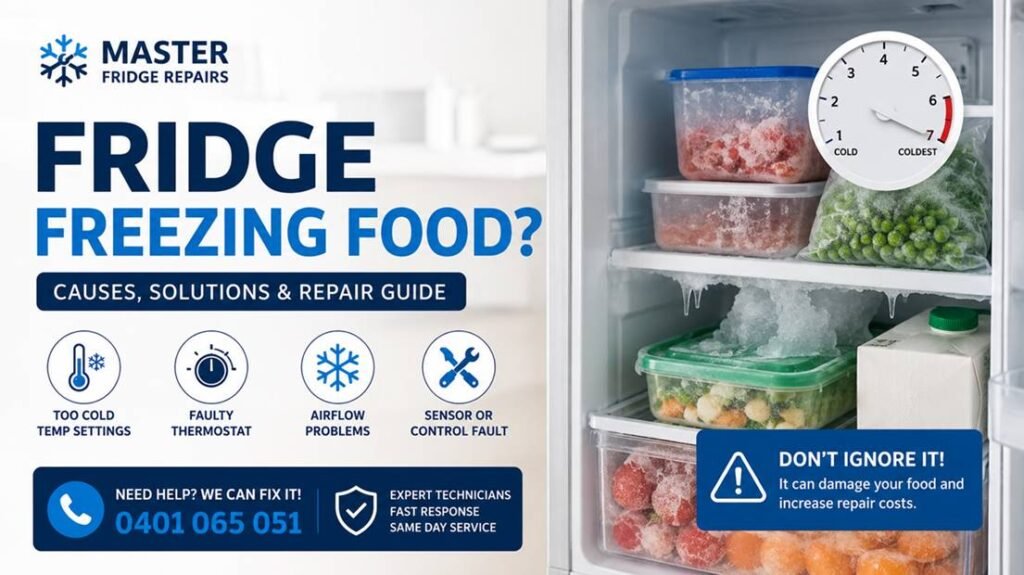
Fresh vegetables turning into blocks of ice? Milk developing ice crystals? Drinks freezing on the middle shelf?
If your refrigerator is freezing food instead of keeping it fresh, the appliance is running too cold or isn’t distributing air correctly. While many people assume a colder fridge is better, temperatures below the recommended range can damage food, increase energy consumption and indicate an underlying mechanical fault.
At Master Fridge Repairs, we regularly repair refrigerators across Sydney that cool far below their intended temperature. Whether you own a French door refrigerator, top mount fridge, side-by-side model, bar fridge or commercial refrigerator, identifying the cause early can help prevent food waste and expensive repairs.
What Temperature Should a Fridge Be?
For food safety, your refrigerator should maintain a temperature between 3°C and 5°C.
The freezer should remain around -18°C.
If the fresh food compartment consistently drops below 0°C, many everyday foods begin to freeze, including:
- Milk
- Eggs
- Fresh vegetables
- Fruit
- Cheese
- Soft drinks
- Leftovers
- Salad ingredients
Frozen food inside the refrigerator compartment usually indicates that the appliance requires adjustment or repair.
Signs Your Fridge Is Running Too Cold
Watch for these common symptoms:
- Vegetables freezing in the crisper drawer
- Milk forming ice crystals
- Drinks freezing overnight
- Food freezing on the top shelf
- Ice forming on the back wall
- Temperature changing throughout the day
- Compressor running continuously
- Excess frost inside the refrigerator compartment
- Uneven cooling between shelves
If multiple symptoms occur together, it’s time to investigate the cooling system.
Common Causes of a Fridge That Freezes Food
1. Incorrect Temperature Settings
This is the simplest cause and one of the most common.
Many homeowners accidentally set the refrigerator to its coldest setting, believing it improves food preservation. In reality, excessively low settings can freeze food unnecessarily.
Check:
- Fridge temperature set below 3°C
- Digital control accidentally adjusted
- Child lock disabled
- Power interruption resetting factory settings
2. Faulty Thermostat
The thermostat monitors cabinet temperature and tells the compressor when to stop cooling.
When it fails, the compressor may continue running long after the correct temperature has been reached.
Common symptoms include:
- Continuous cooling
- Frozen food
- Ice forming inside the fridge
- Constant compressor operation
A faulty thermostat usually requires professional replacement.
3. Defective Temperature Sensor (Thermistor)
Modern refrigerators rely on electronic thermistors rather than mechanical thermostats.
If the thermistor sends incorrect temperature readings, the control board believes the fridge is warm—even when it’s already cold.
The result:
- Excessive cooling
- Temperature swings
- Frozen food
- Inconsistent operation
4. Damaged Air Damper
Many refrigerators share cooling between the freezer and fridge.
A motorised air damper controls how much cold air enters the refrigerator compartment.
If it becomes stuck open:
- Too much freezer air enters
- Refrigerator freezes food
- Freezer operates normally
- Upper shelves become much colder
This is particularly common in side-by-side and French door refrigerators.
5. Faulty Control Board
Electronic control boards coordinate:
- Compressor operation
- Fans
- Defrost cycles
- Sensors
- Temperature regulation
When the board malfunctions, it may continuously power the compressor even after the correct temperature has been reached.
6. Blocked Airflow
Cold air needs to circulate freely.
Problems include:
- Food blocking vents
- Overpacked shelves
- Items pushed against the rear wall
- Frozen evaporator vents
Poor airflow often creates:
- Frozen food near vents
- Warm food elsewhere
- Uneven temperatures
7. Dirty Condenser Coils
Dirty condenser coils reduce refrigeration efficiency.
The appliance compensates by running longer cooling cycles, sometimes causing excessive cooling.
Cleaning condenser coils every 6–12 months helps maintain consistent temperatures and improves energy efficiency.
8. Door Seal Problems
Damaged door gaskets allow warm air inside.
The refrigerator works harder to compensate, increasing compressor run time.
Longer cooling cycles may create freezing temperatures in certain sections.
Check for:
- Torn seals
- Loose gaskets
- Condensation
- Warm air leaks
- Doors not closing properly
Why Is Only One Shelf Freezing Food?
This is usually caused by airflow rather than overall refrigerator temperature.
Possible causes include:
- Food stored directly in front of vents
- Faulty air damper
- Fan circulation issues
- Blocked airflow
- Incorrect shelf placement
Moving food away from the cold air outlet often solves the problem temporarily.
Can Winter Weather Cause Food to Freeze?
Yes.
During colder months, garages, enclosed patios and outdoor kitchens may experience unusually low ambient temperatures.
Cold external air can confuse temperature sensors, affecting compressor operation and airflow.
Outdoor refrigerators and garage fridges are particularly susceptible to winter-related cooling issues.
DIY Checks Before Booking a Repair
Before calling a technician:
- Set the refrigerator between 3°C and 5°C.
- Ensure food isn’t blocking air vents.
- Check the door seals for damage.
- Clean the condenser coils.
- Avoid overfilling the refrigerator.
- Allow 24 hours after changing settings.
- Monitor temperatures using a fridge thermometer.
If food continues freezing after these checks, professional diagnosis is recommended.
When Should You Call a Fridge Repair Technician?
Arrange a repair if:
- Food freezes every day
- The compressor never switches off
- Ice builds inside the fridge
- Temperature constantly changes
- Error codes appear
- Electronic controls stop responding
- The thermostat appears faulty
- The appliance is more than 5 years old and symptoms persist
Ignoring these issues can increase electricity costs, shorten compressor life and lead to complete cooling failure.
We Repair Fridges That Freeze Food Across Sydney
Master Fridge Repairs diagnoses and repairs refrigerators experiencing excessive cooling across Sydney.
Our experienced refrigeration technicians repair:
- Thermostats
- Thermistors
- Air dampers
- Electronic control boards
- Evaporator fans
- Door seals
- Compressors
- Refrigerant system faults
We service most domestic and commercial refrigerator brands and provide same-day service where available.
Whether your refrigerator is freezing vegetables, milk or drinks, we’ll identify the root cause and restore safe operating temperatures.
Call Master Fridge Repairs today on 0401 065 051 for a free quote and professional fridge repairs anywhere in Sydney.
Frequently Asked Questions
Why is my fridge freezing food instead of cooling it?
The most common causes are incorrect temperature settings, a faulty thermostat, a defective thermistor, a stuck air damper or a malfunctioning control board.
What is the ideal fridge temperature?
The recommended refrigerator temperature is between 3°C and 5°C, while the freezer should remain around -18°C.
Can a faulty thermostat make my fridge too cold?
Yes. If the thermostat fails, it may not signal the compressor to stop, causing the refrigerator to continue cooling until food freezes.
Why is only the top shelf freezing?
Cold air vents are often located near the top or rear of the refrigerator. Blocked airflow, a faulty damper or storing food directly in front of vents can create freezing spots.
Is it safe to keep eating food that has frozen in the fridge?
It depends on the food. Some items, such as vegetables and dairy products, may lose texture and quality after freezing. If you’re unsure, follow Australian food safety guidelines or discard questionable items.