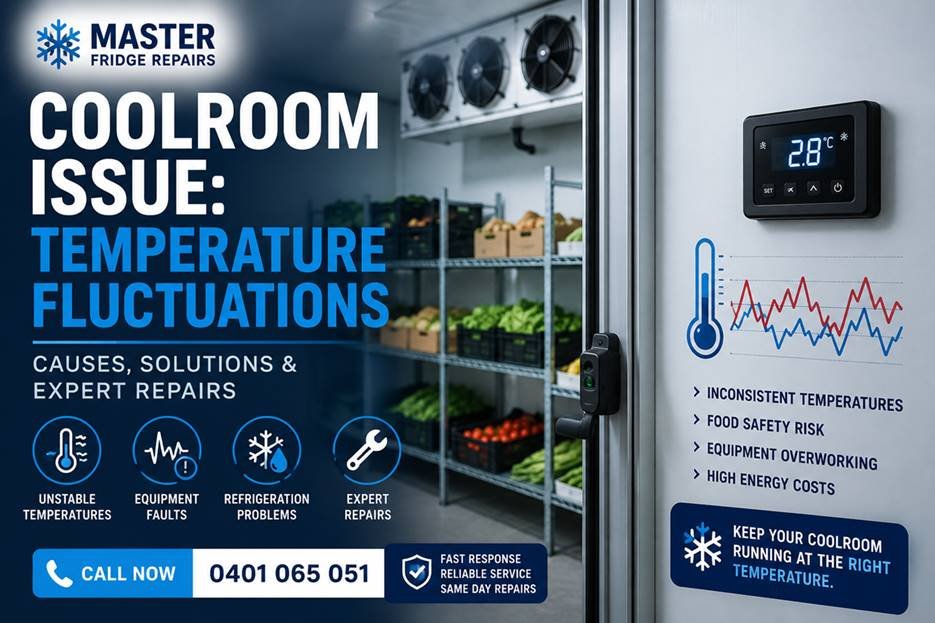
Is Your Coolroom Temperature Constantly Changing?
A commercial coolroom should maintain a stable temperature throughout the day. If your coolroom temperature rises and falls unexpectedly, food safety, stock quality and business operations can quickly be affected.
Temperature fluctuations are one of the most common commercial refrigeration problems experienced by restaurants, cafes, supermarkets, florists, butchers, bottle shops, commercial kitchens and food manufacturers across Sydney.
Even a few degrees outside the recommended operating range can shorten product shelf life, increase energy consumption and place unnecessary strain on the refrigeration system.
At Master Fridge Repairs, we diagnose and repair commercial coolroom temperature problems every day. Whether your coolroom occasionally warms up or struggles to maintain a consistent temperature, our experienced refrigeration technicians can quickly identify the cause and restore reliable cooling.
Why Stable Coolroom Temperatures Matter
Commercial coolrooms are designed to keep perishable products within safe storage temperatures.
Temperature instability can lead to:
- Food spoilage
- Higher electricity costs
- Compressor overworking
- Ice formation
- Product quality loss
- Food safety compliance issues
- Increased equipment wear
- Unexpected business downtime
For businesses operating under Australian food safety regulations, maintaining consistent refrigeration temperatures is essential.
What Temperature Should a Coolroom Operate At?
The ideal operating temperature depends on the type of products stored inside your coolroom.
Most commercial food coolrooms should maintain a consistent temperature between 1°C and 4°C to keep perishable items fresh and safe for consumption. Dairy products are best stored between 1°C and 3°C, while fresh fruit and vegetables generally require slightly warmer conditions of around 3°C to 8°C, depending on the produce. Fresh meat should be kept as close to 0°C to 2°C as possible to maximise freshness and comply with food safety standards.
Beverage coolrooms typically operate between 2°C and 5°C, ensuring drinks remain cold without freezing. For walk-in freezers, temperatures should consistently remain at -18°C or lower to preserve frozen stock and prevent thawing.
If your coolroom regularly moves outside these recommended temperature ranges, it is usually a sign of an underlying refrigeration issue that should be professionally diagnosed before it leads to product loss or equipment failure.
Signs Your Coolroom Temperature Is Fluctuating
Watch for these warning signs:
- Temperature constantly changing
- Food spoiling earlier than expected
- Compressor running continuously
- Cooling stops randomly
- Ice forming on evaporator coils
- Warm products near the door
- Condensation inside the coolroom
- Alarm notifications from temperature monitors
- Uneven temperatures between shelves
- High electricity bills
Many businesses first notice the issue when products no longer remain at safe storage temperatures.
Common Causes of Coolroom Temperature Fluctuations
1. Dirty Condenser Coils
Dirty condenser coils reduce heat transfer.
Dust, grease and debris prevent the refrigeration system from releasing heat efficiently, causing temperatures to rise before the compressor eventually catches up.
Common in:
- Restaurants
- Bakeries
- Commercial kitchens
- Food factories
Regular preventative maintenance significantly reduces this problem.
2. Evaporator Fan Problems
The evaporator fan circulates cold air evenly throughout the coolroom.
If the fan slows down or stops:
- Cold air cannot circulate properly.
- Hot and cold zones develop.
- Products nearest the fan freeze while others warm up.
- Overall temperature becomes unstable.
3. Refrigerant Leaks
Low refrigerant is one of the most common causes of inconsistent cooling.
Typical symptoms include:
- Longer cooling cycles
- Temperature drifting upwards
- Compressor running continuously
- Poor cooling performance
- Rising electricity costs
Refrigerant leaks require professional leak detection and repair before the system is regassed.
4. Faulty Temperature Sensors
Modern commercial refrigeration relies on electronic sensors.
When a sensor sends incorrect readings:
- The controller receives inaccurate temperature information.
- Compressors cycle incorrectly.
- Cooling becomes inconsistent.
- Temperature alarms may trigger unnecessarily.
5. Defrost System Failure
Every coolroom periodically enters a defrost cycle.
If the defrost timer, heaters or sensors fail:
- Ice builds on evaporator coils.
- Airflow becomes restricted.
- Cooling efficiency decreases.
- Temperature fluctuates throughout the day.
6. Damaged Door Seals
Door gaskets play an important role in maintaining stable temperatures.
Worn seals allow warm air inside every time the compressor cycles.
This causes:
- Moisture build-up
- Compressor overworking
- Ice accumulation
- Constant temperature swings
7. Frequent Door Openings
Busy hospitality businesses often experience temperature fluctuations simply because the coolroom door remains open too long.
This is especially common in:
- Restaurants
- Cafes
- Hotels
- Supermarkets
- Catering businesses
Installing automatic door closers or PVC strip curtains can significantly improve cooling performance.
8. Overloaded Coolroom
Poor airflow is another common cause.
Stacking products too close to:
- Evaporators
- Air vents
- Fan outlets
prevents proper circulation.
Cold air must move freely throughout the room for consistent temperatures.
9. Faulty Expansion Valve
The thermostatic expansion valve regulates refrigerant entering the evaporator.
When it sticks:
- Cooling becomes inconsistent.
- Compressor efficiency decreases.
- Evaporator temperatures fluctuate.
- Cooling performance suffers.
This fault should always be diagnosed by a qualified refrigeration technician.
10. Compressor Problems
The compressor is the heart of every refrigeration system.
As compressors wear:
- Cooling capacity drops.
- Temperature recovery becomes slower.
- The system struggles during busy periods.
- Energy consumption increases.
Early diagnosis often prevents complete compressor failure.
How to Troubleshoot Coolroom Temperature Problems
Before arranging repairs, perform these basic checks:
✓ Confirm thermostat settings.
✓ Check door seals.
✓ Ensure condenser coils are clean.
✓ Remove products blocking airflow.
✓ Listen for evaporator fan operation.
✓ Inspect for excessive ice build-up.
✓ Verify doors close completely.
✓ Check for visible water leaks.
If temperatures remain unstable, professional diagnosis is recommended.
Can Temperature Fluctuations Damage Food?
Yes.
Even temporary increases above recommended temperatures may reduce food quality and shelf life.
Temperature fluctuations can affect:
- Dairy products
- Meat
- Seafood
- Frozen foods
- Fresh produce
- Cakes
- Beverages
- Pharmaceuticals
- Floral products
Maintaining consistent refrigeration is essential for both food safety and business compliance.
Preventing Future Coolroom Temperature Problems
Routine maintenance is the most effective prevention.
Recommended servicing includes:
- Condenser coil cleaning
- Refrigerant pressure testing
- Fan motor inspection
- Door seal replacement
- Electrical testing
- Thermostat calibration
- Defrost system inspection
- Temperature monitoring verification
Scheduled maintenance helps extend equipment life while reducing costly emergency breakdowns.
Why Choose Master Fridge Repairs?
Master Fridge Repairs provides professional commercial refrigeration services across Sydney.
We repair:
- Walk-in coolrooms
- Walk-in freezers
- Commercial refrigerators
- Display fridges
- Cake display fridges
- Beverage coolers
- Hospitality refrigeration systems
- Commercial freezer rooms
Our experienced refrigeration technicians diagnose temperature fluctuation problems quickly and carry common commercial refrigeration parts to complete many repairs on the first visit.
Same-day service is available where possible for businesses experiencing urgent refrigeration issues.
Get Your Coolroom Running at the Right Temperature Again
Unstable coolroom temperatures should never be ignored. What starts as a minor cooling issue can quickly lead to food spoilage, business disruption and expensive refrigeration repairs.
Master Fridge Repairs provides fast, reliable coolroom diagnostics and commercial refrigeration repairs across Sydney.
FAQs
Why is my coolroom temperature constantly changing?
Common causes include dirty condenser coils, refrigerant leaks, faulty temperature sensors, evaporator fan problems, defrost system failures and damaged door seals.
What temperature should a commercial coolroom maintain?
Most food coolrooms should operate between 1°C and 4°C, although the ideal temperature depends on the products being stored.
Can low refrigerant cause temperature fluctuations?
Yes. A refrigerant leak reduces cooling capacity, causing the compressor to run longer while struggling to maintain consistent temperatures.
How often should a commercial coolroom be serviced?
Most commercial refrigeration systems should receive professional preventative maintenance every 3 to 6 months, depending on usage and operating conditions.
When should I call a commercial refrigeration technician?
If your coolroom cannot maintain a stable temperature, develops excessive ice, runs continuously or triggers temperature alarms, professional diagnosis should be arranged as soon as possible.